
White Rhinoceros
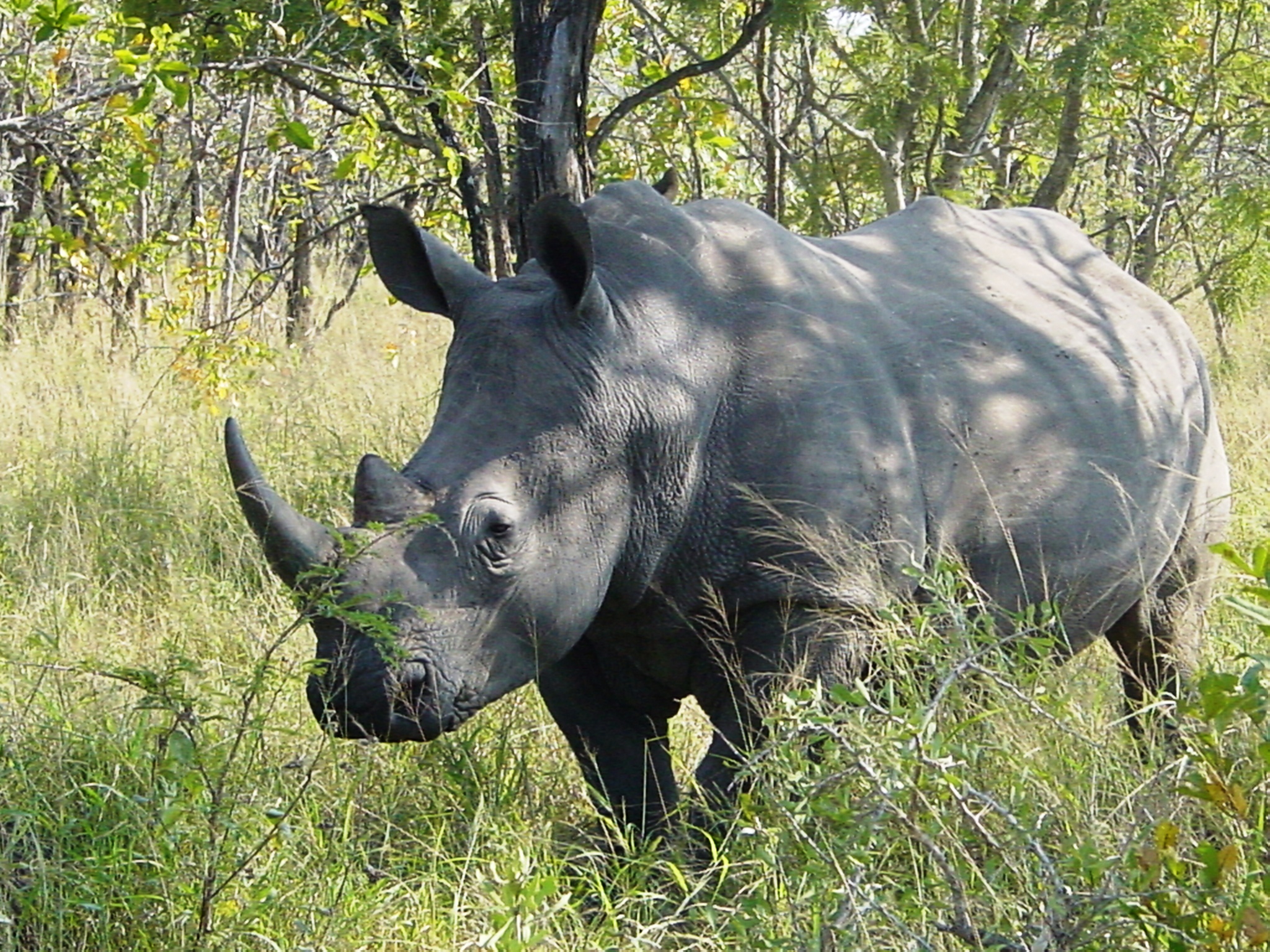
White Rhinoceros / Ceratotherium simum
|
Habitat: |
White Rhino is not really white, and neither is the Black Rhino black. They have been names so in order to distinguish between them. This is the larger one, with a visibly wider muffle and an almost twice as large body. It is, in actual fact, an endangered species. Currently under protection. Hunting quotas have been sold for 10 years ahead. |
|
Size: |
A typical male is about 180 cm. tall at the withers and weighs up to 2300 kg.; a female weighs up to 1600 kg. |
|
Habits: |
Does not form herds, rather a family community of a male, female and calves. Feeds on foliage, branches and grass. Particularly aggressive, it will charge if wounded or is its sanitary minimum is infringed. Guards a strictly marked territory. Very enduring to wounds and chase. |
|
Hunting advice: |
Most often, it is hunted by stalking on land or at drinking places. Aim at the head if the animal is too close to you. This is not easy to do due to the shape of the head – aim between the ear and the eye – there lies the brain. From a distance, we recommend to shoot at the chest. A wounded Rhino is a dangerous adversary. |
|
Caliber: |
We recommend a caliber of minimum .416. In actual fact, the minimum caliber allowed is .375 HH Magnum, but it is a slightly light stopper for that mass. The skin is very thick and it is useless to use a soft-point bullet. |
|
Trophy: |
The horn, feet and tail. We do not recommend taxidermy treatment in Africa. The horn record is 1,58 cm. |
|
Location: |
It is most often hunted in fenced territories in RSA; we also offer a “green hunt” – sedating the animal and taking a cast of the horn, which is a much cheaper hunt. |